Built with boards and managers · Your data, exportable
“Our owners finally stopped asking where the money went. They can just look.”
Demo community · Cedar Park Co-op
Annual Financial ReportSample
Reserve balance$1.24M
Operating income$412,800
Expenses$364,150
Visible to128 owners
Budget approved · unanimousSample board vote
Built for boardsLoved by managersUnderstood by residentsOne clear record
See it in action
One platform. Every side of the community.
From administration to accounting to the conversation next door — a few of the views, all working from the same set of books.
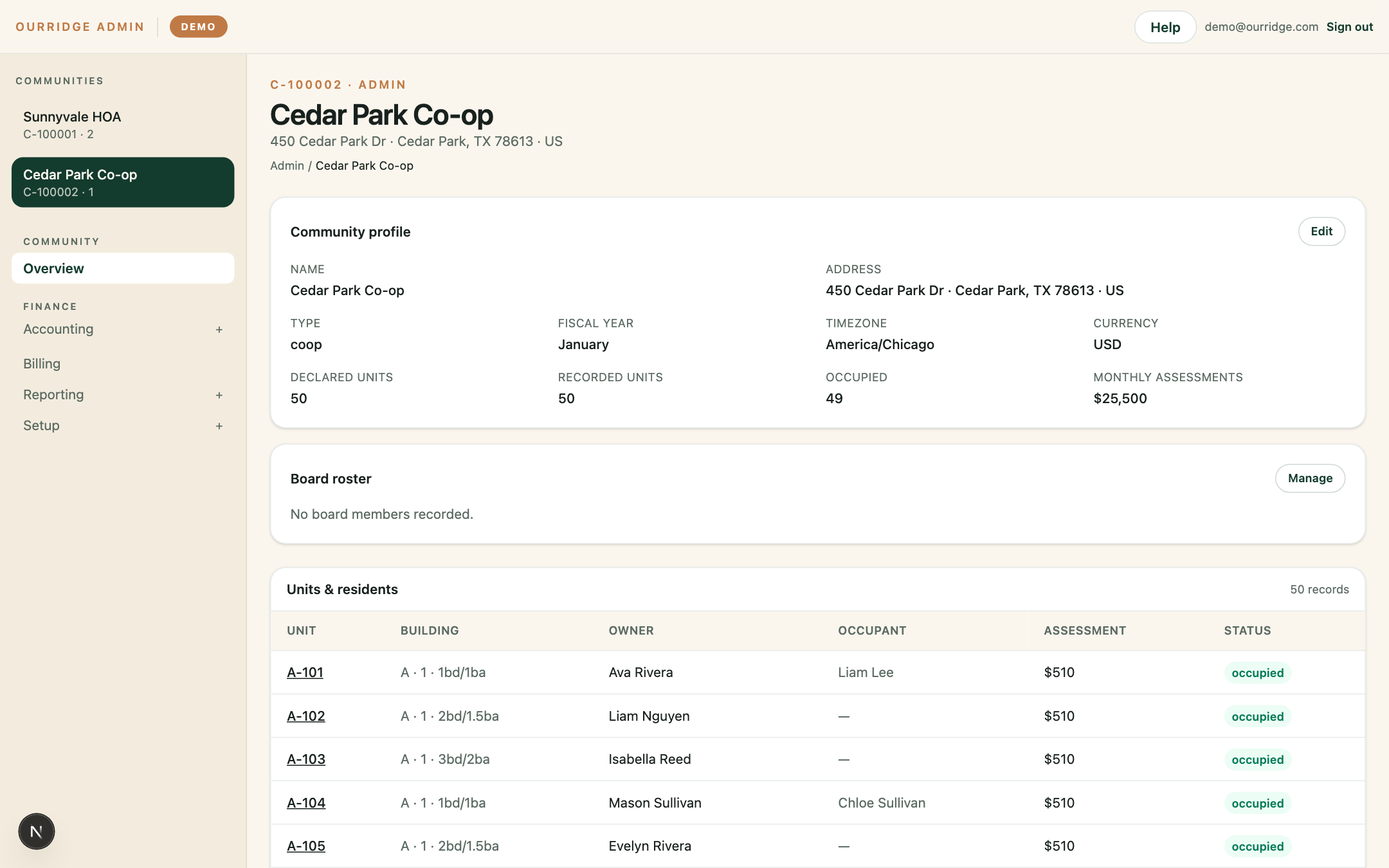
Community overview
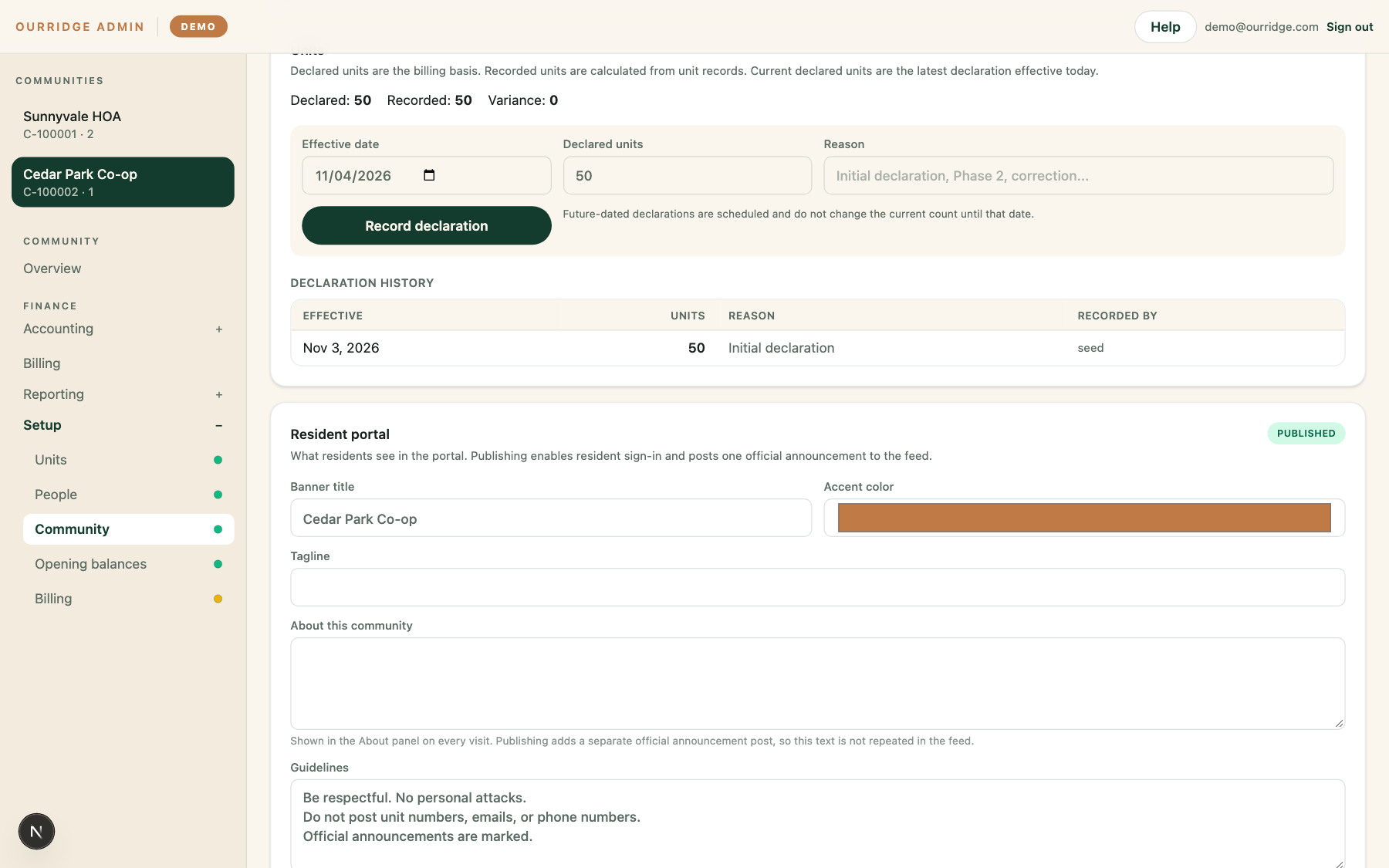
One page per community: the name, address, and fiscal year; declared units against recorded ones; monthly assessments; the board roster; and every unit with its owner, occupant, and assessment.
Declared and recorded units side by side, so a discrepancy cannot hide
Owners and occupants as separate fields, because they are separate people
Occupancy visible at a glance, which is what a manager asks first
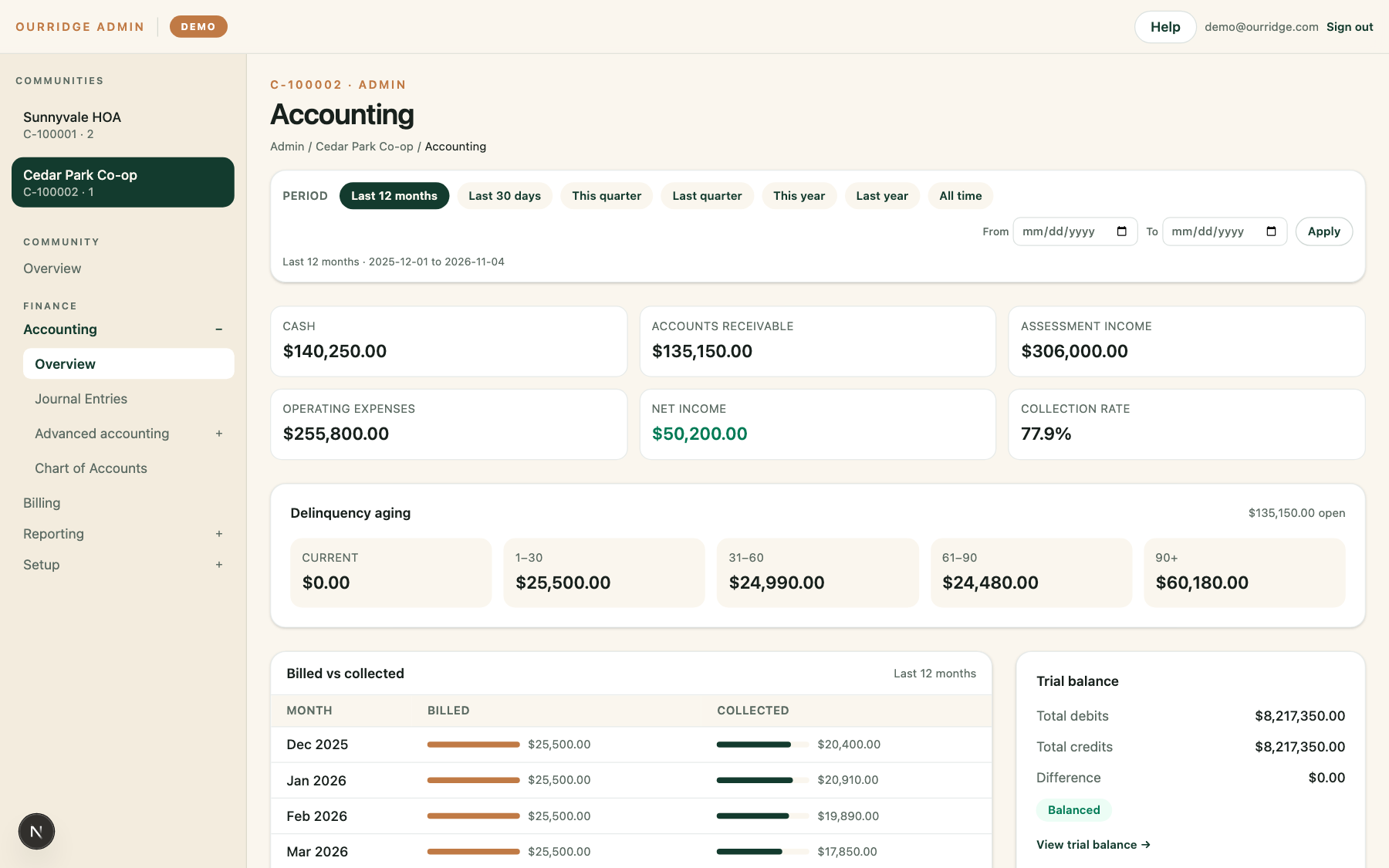
Accounting
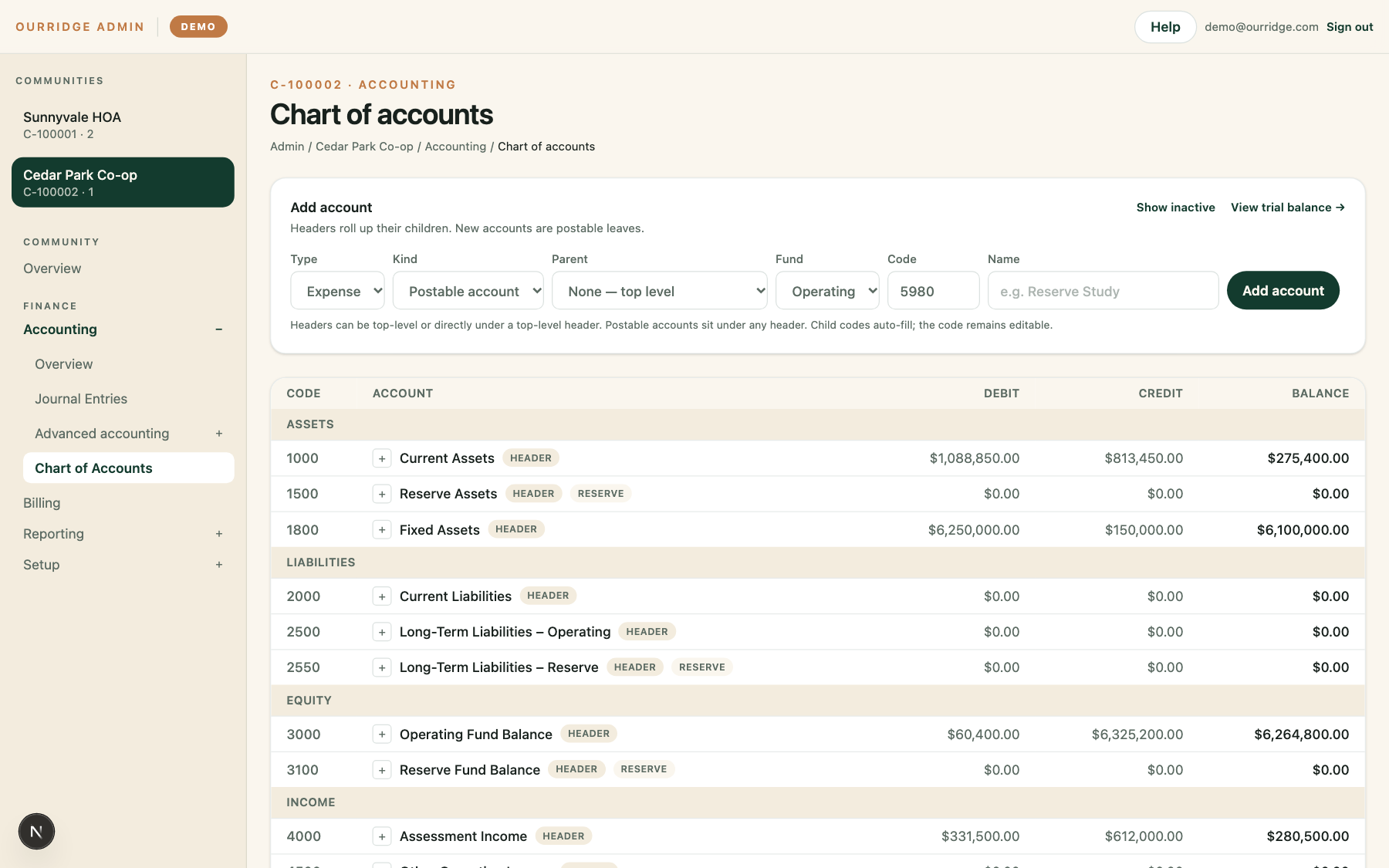
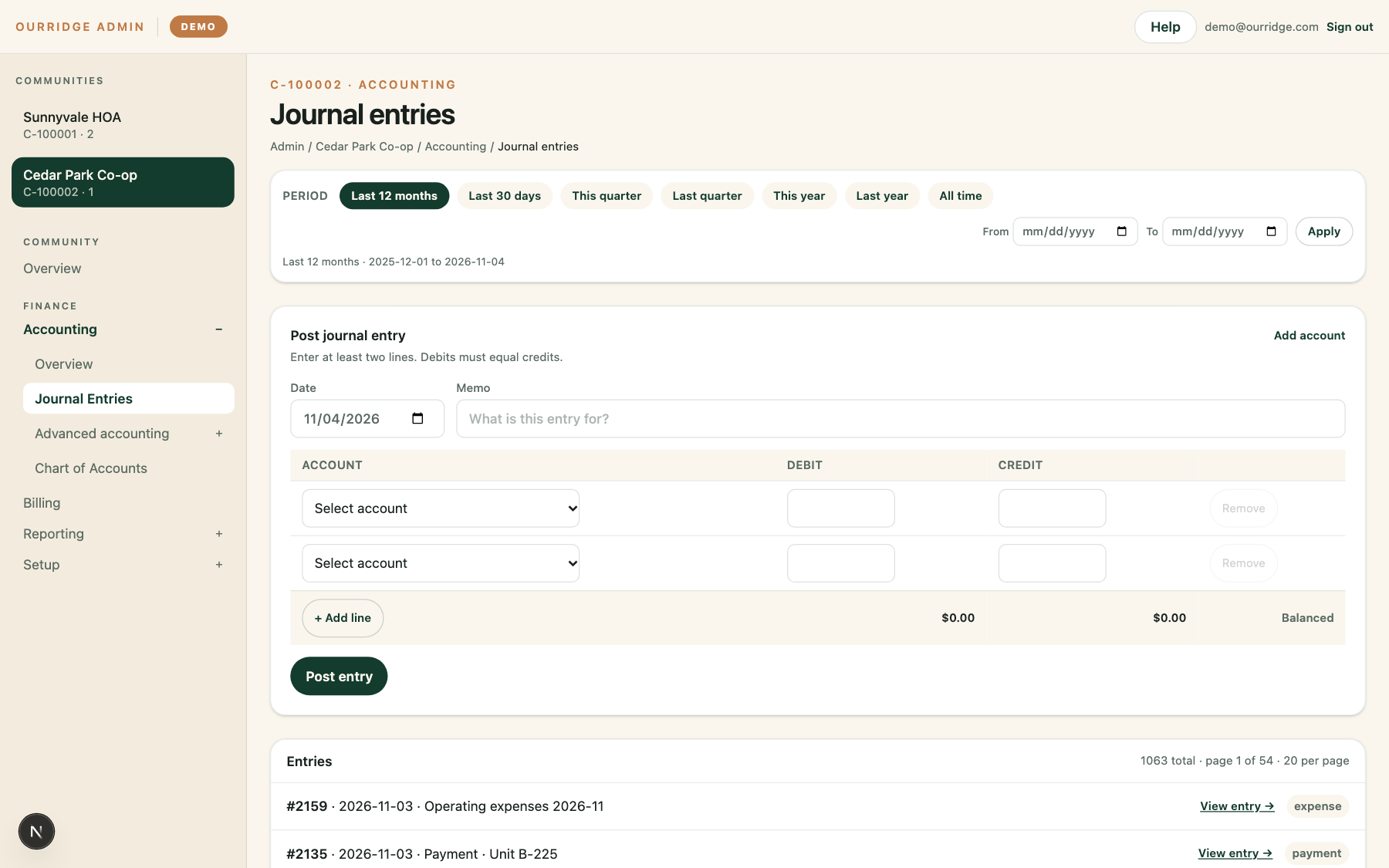
Double-entry bookkeeping built for associations rather than adapted from a business ledger, so the things a board argues about are already the shape of the system.
Operating and reserve funds kept apart, so reserve money cannot be spent by accident
Journal entries refused unless debits and credits agree
Income statement, balance sheet, and trial balance from the same records
Year-end close that locks the year and carries balances forward
Export to Excel or CSV at any time, without asking
Billing
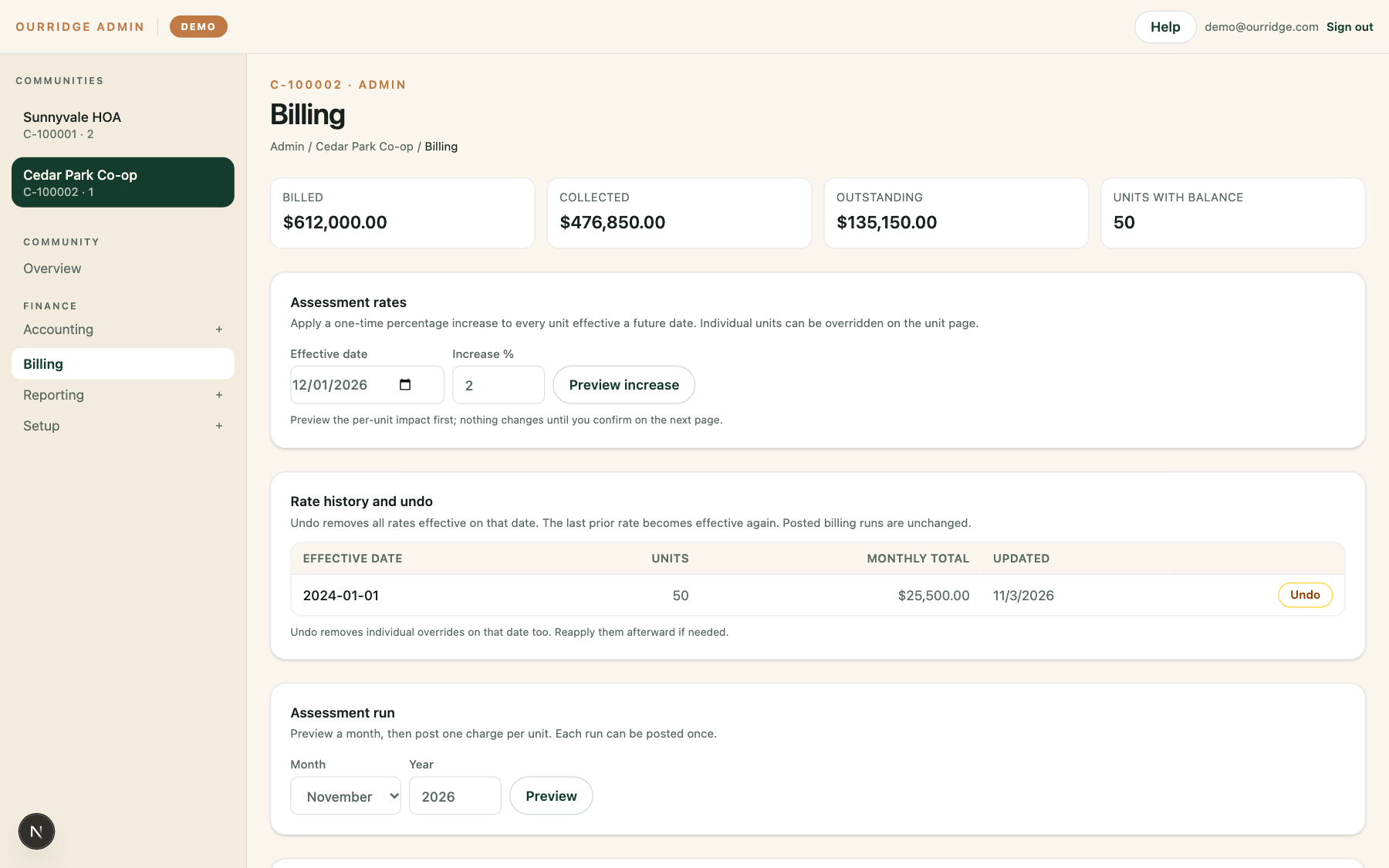
Assessments billed per unit, with the numbers a treasurer is asked for already on the page: what was billed, what came in, and what is still owed.
Billed, collected, outstanding, and how many units still carry a balance
Rate increases previewed per unit before they take effect
Rate changes dated, and reversible without touching posted runs
One charge per unit per month, and each run posts exactly once
Units and people
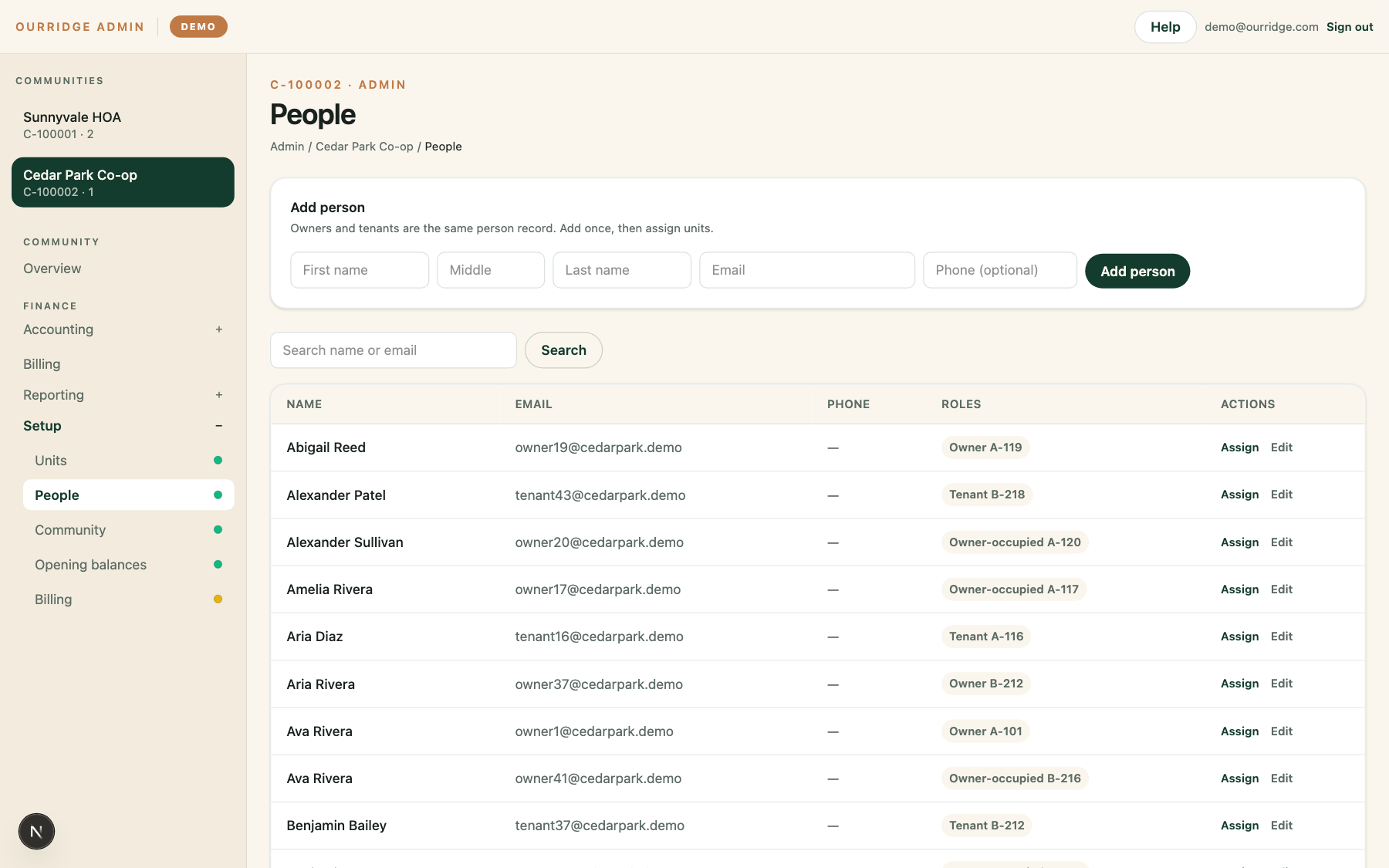
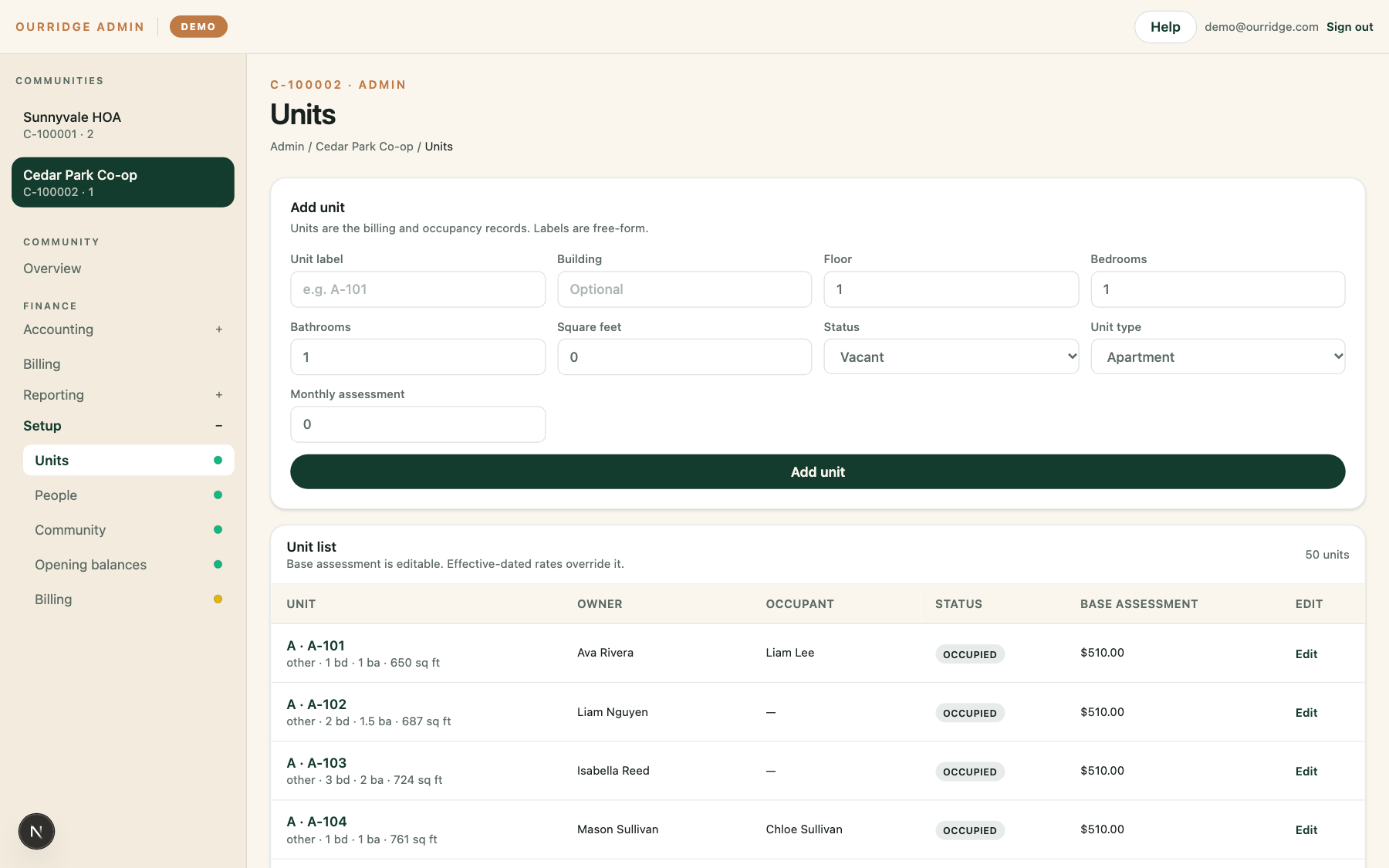
A unit is the billing and occupancy record. A person is one record that can hold several roles, so a board member who also owns two units is entered once.
Owners and tenants are the same person record, with roles attached per unit
Each unit carries its own assessment, overriding the community rate when it must
Size, floor, and occupancy belong to the unit, not to whoever lives there now
Search people by name or email, and assign a unit without re-entering them
Community
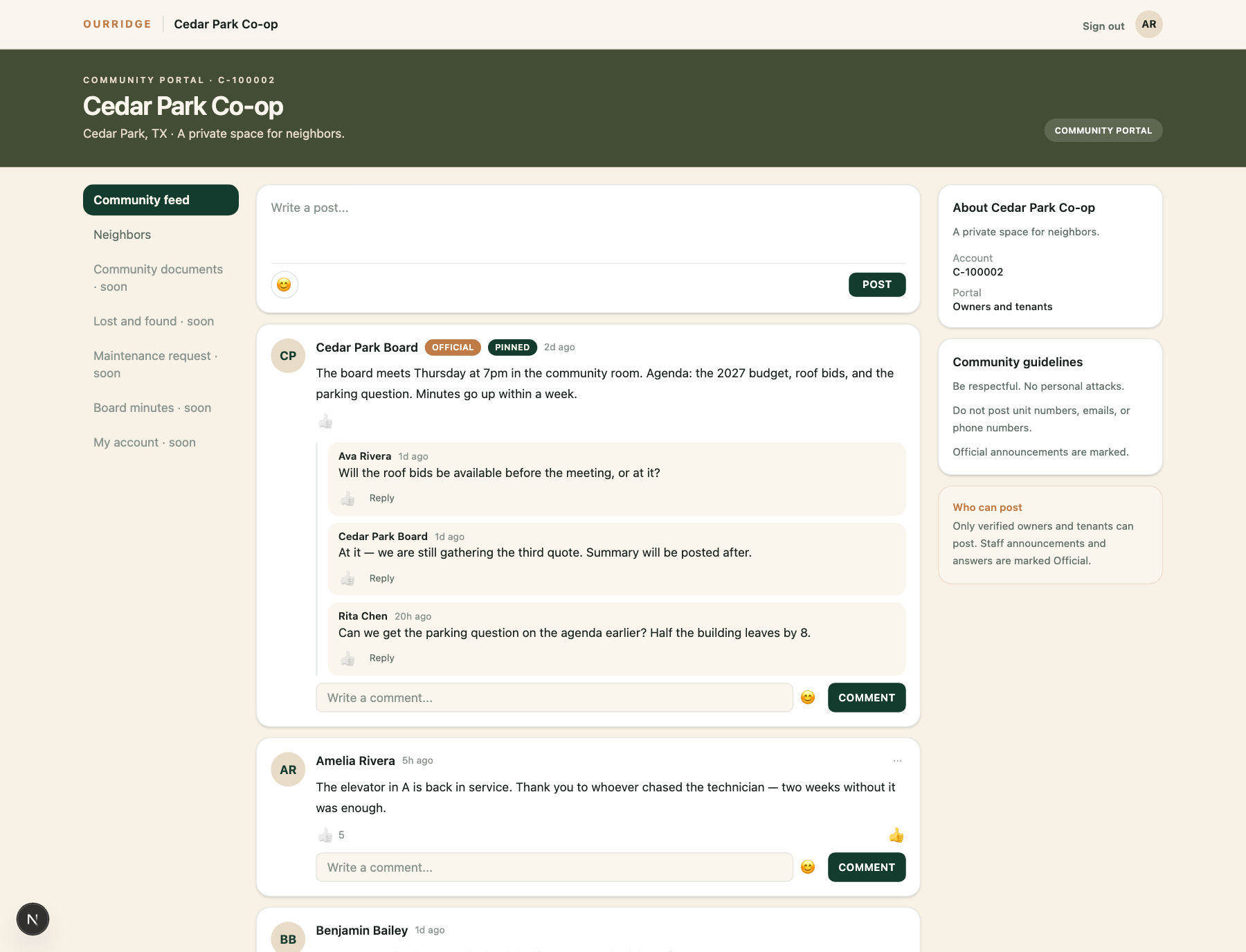
A private space for verified owners and tenants: announcements, questions, reactions, and the neighborly business that otherwise lives in a group chat.
Only verified owners and tenants can post; official posts are marked
Threaded replies keep a question and its answer together
Neighbors lists names only, never unit numbers, emails, or phone numbers
Guidelines sit beside the feed rather than buried in a policy page
The tour
Five chapters. One clear record.
Scroll →
01The three views
Same truth. Different seats.
The board sees control. The manager sees leverage. The resident sees clarity.
“I can answer an owner's question in thirty seconds.”
Board presidentForty-unit co-op
“I stopped rebuilding the same spreadsheet for every community.”
Portfolio managerManages several communities
“I finally know what my dues pay for.”
OwnerLives in the community
02What's inside
What a community actually needs.
Not a suite of modules. A single record, with the tools arranged around the work.
01Accounting
02Billing
03Units and people
04Community feed
05Reporting
06Documents soon
07Service requests soon
03The shared record
Confidence is not a newsletter. It is a system.
When you publish a report, owners can see it. Every number traces to a source.
Annual Financial Report Sunnyvale HOA · FY 2026
Finalized
Operating income$412,800
Operating expenses$364,150
Reserve balance$1.24M
04One clear record
Run a community people are proud of.
Onboarding, billing, documents, and decisions in one place — with a record that survives turnover.
Owners see the reports they are entitled to
Tenants read documents, not financials
The board keeps an audit trail
05The price
Affordable, and no surprises.
$2.50 per unit, per month, billed to the association. A $49 monthly minimum, ninety days free before the first charge.
No implementation, onboarding, or training fee
Ten percent less from ten communities onward
First charge refunded in full within fourteen days